Learning Outcomes
i. Define parthenogenesis and its role in asexual reproduction.
ii. Identify species in which parthenogenesis occurs and the mechanisms behind it.
iii. Examine the implications of parthenogenesis for genetic diversity and species survival.
i. Definition of Parthenogenesis:
A form of asexual reproduction where an egg develops into a complete organism without being fertilized by a sperm. This process results in offspring that are genetically identical to the mother.
ii. Occurrences of Parthenogenesis
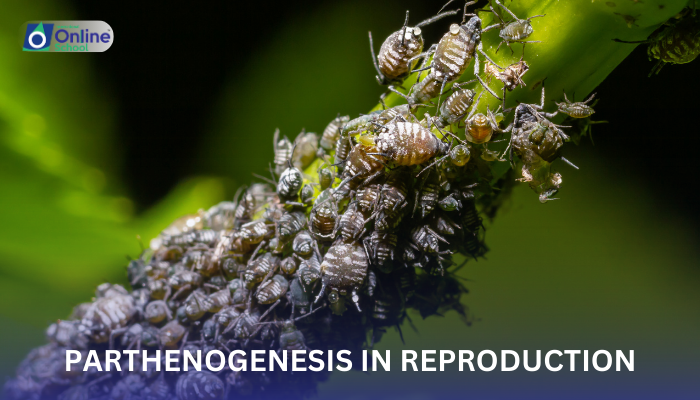
Species: Parthenogenesis is found in various species, including some invertebrates like aphids, bees, and certain wasps, as well as in vertebrates like some fish, amphibians, reptiles, and very rarely, birds.
Mechanisms: There are several mechanisms of parthenogenesis, including automixis, where the egg's nucleus fuses with a polar body to restore diploidy, and apomixis, where the egg develops directly into an embryo without any fusion.
iii. Implications of Parthenogenesis
Genetic Diversity: While parthenogenesis results in less genetic variation compared to sexual reproduction, it can be advantageous in stable environments where changes are minimal.
Species Survival: It allows for rapid population growth and can be a survival strategy in the absence of males, although it may reduce the species' ability to adapt to changing conditions.
Ecological and Evolutionary Roles: Parthenogenetic species can exploit specific niches and contribute to ecosystem dynamics. The process also raises questions about the evolutionary advantages of sexual vs. asexual reproduction.
In conclusion, parthenogenesis is a unique reproductive strategy that some species use to produce offspring without fertilization. While it offers the advantage of producing numerous offspring quickly, it may limit genetic diversity and adaptability. Understanding parthenogenesis provides insight into the complexity of reproductive strategies and their evolutionary significance.
